

Dogs are thinkers. Anyone who has lived with a dog long enough understands that they are constantly observing, problem solving, and trying to understand the world around them. At Animal Friends’ Pampered Paws, we see it every single day. Dogs that are given opportunities to engage their minds are calmer, happier, and more confident. Dogs that are bored mentally often find their own ways to stay entertained, which can include chewing furniture, digging holes, or barking endlessly.
Mental stimulation is not just a nice extra for dogs. It is a fundamental part of their wellbeing. Physical exercise is important, but the brain requires activity just as much as the body. During our dog daycare and boarding stays, we regularly incorporate enrichment activities and interactive play because we know that dogs thrive when their minds are challenged. One of the easiest ways for dog owners to support that mental health at home is through thoughtfully chosen dog toys designed for mental stimulation.
The right toy does more than entertain. It activates natural instincts, encourages problem solving, and helps dogs burn energy in productive ways.
Why Mental Stimulation Matters for Dogs
Dogs evolved as working animals. Whether they were herding livestock, retrieving game, guarding property, or tracking scents, their brains were designed to solve problems and complete tasks. Modern household dogs still carry those instincts even if their daily job is simply being a beloved family member.
Without opportunities to use their minds, dogs often become restless. That restlessness can appear as hyperactivity, anxiety, destructive behavior, or excessive vocalizing. Many owners assume their dog simply needs more walks, but sometimes what the dog really needs is something that makes them think.
Mental enrichment provides several important benefits. It reduces boredom, builds confidence, strengthens problem solving skills, and even improves the bond between dog and owner. When a dog works through a puzzle toy or figures out how to retrieve hidden treats, they experience a sense of accomplishment that supports their emotional wellbeing.
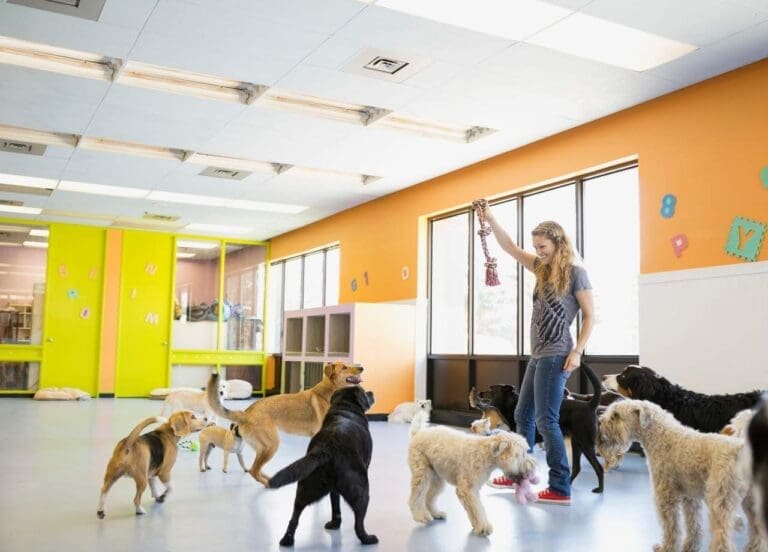
We often see this in our play groups as well. Dogs that regularly engage with enrichment toys and activities tend to settle into group environments more comfortably. Their minds are used to working through challenges and adapting to new situations.
The Science Behind Enrichment Toys
Mental stimulation toys work because they trigger natural canine behaviors. Many are designed around instincts such as foraging, sniffing, chewing, and hunting. When dogs engage in these behaviors in structured ways, their brains release dopamine, which is the same reward chemical humans experience when solving a puzzle or completing a goal.
Interactive toys slow down feeding, encourage strategic thinking, and extend playtime. Instead of finishing a meal in thirty seconds, a dog might spend fifteen minutes working through a puzzle feeder. That extra time spent engaging with food taps into their natural scavenging instincts.
Chew toys also provide mental benefits. Chewing activates calming responses in dogs and helps reduce stress. It is one reason puppies often chew more during times of change. Providing appropriate outlets through durable toys can channel that instinct productively.
The best enrichment toys combine multiple forms of stimulation. For example, a toy might require sniffing to locate food, pawing to release it, and chewing to access the final reward.
Puzzle Toys That Encourage Problem Solving
Puzzle toys are among the most effective tools for mental enrichment. These toys require dogs to manipulate pieces, slide compartments, or lift covers in order to access hidden treats. For dogs that enjoy challenges, puzzle toys can become a favorite daily activity.
Beginner puzzles are typically simple. They may involve sliding panels or flipping small lids to reveal treats. These toys are ideal for dogs new to enrichment because they help build confidence. When dogs succeed early, they become more motivated to try more difficult puzzles.
Intermediate puzzles often include multiple steps. A dog may need to move one piece before another becomes accessible. These toys keep dogs engaged for longer periods and prevent them from solving the challenge too quickly.
Advanced puzzle toys can be surprisingly complex. Some involve rotating pieces, multiple layers, or hidden compartments. Highly intelligent breeds such as Border Collies, Australian Shepherds, and Belgian Malinois often excel at these challenges.
At our facility, we have learned that puzzle toys can quickly become a favorite activity for many dogs during quiet enrichment periods. Watching a dog focus intently while working through a puzzle is a reminder of just how thoughtful and capable they really are.
Food Dispensing Toys That Turn Meals into Games
Many dogs eat their meals extremely quickly. While that might seem harmless, rapid eating can contribute to digestive issues and provides very little mental engagement.
Food dispensing toys turn mealtime into a problem solving activity. These toys release kibble or treats gradually as the dog rolls, nudges, or manipulates them. Instead of a bowl that empties instantly, the dog must work to earn each piece of food.
This approach mimics natural foraging behavior. In the wild, canines spend a significant portion of their time searching for food. A food dispensing toy recreates that experience in a safe and structured way.
Dogs that use these toys often show increased satisfaction after meals. The process of working for food helps burn mental energy and can reduce attention seeking behavior later in the day.
For energetic breeds or dogs that stay home during the workday, food dispensing toys can provide valuable enrichment while owners are away.
Snuffle Mats and Scent Games
Dogs experience the world primarily through their noses. Their sense of smell is incredibly powerful, capable of detecting scents at levels humans cannot even imagine. Snuffle mats and scent based toys take advantage of this natural ability.
A snuffle mat is typically made from layers of soft fabric strips where small treats can be hidden. Dogs must use their noses to locate each piece of food buried within the folds. This activity encourages slow, focused searching that keeps dogs mentally engaged.
Scent games are particularly helpful for dogs that may not be able to engage in intense physical activity due to age, injury, or weather conditions. Even ten minutes of scent work can tire a dog mentally.
During quieter moments at our boarding facility, scent enrichment is often used to help dogs decompress. Sniffing is a calming activity for many dogs and can help them settle after active play sessions.
Chew Toys That Provide Mental Relief
Chewing is one of the most underrated forms of mental enrichment. Dogs naturally chew to explore, relieve stress, and maintain dental health. Durable chew toys provide an outlet for that instinct while protecting household items from becoming unintended chew targets.
The key is choosing toys that are safe, durable, and appropriate for your dog’s chewing style. Some dogs prefer softer rubber toys they can compress, while others enjoy tougher materials that withstand heavy chewing.
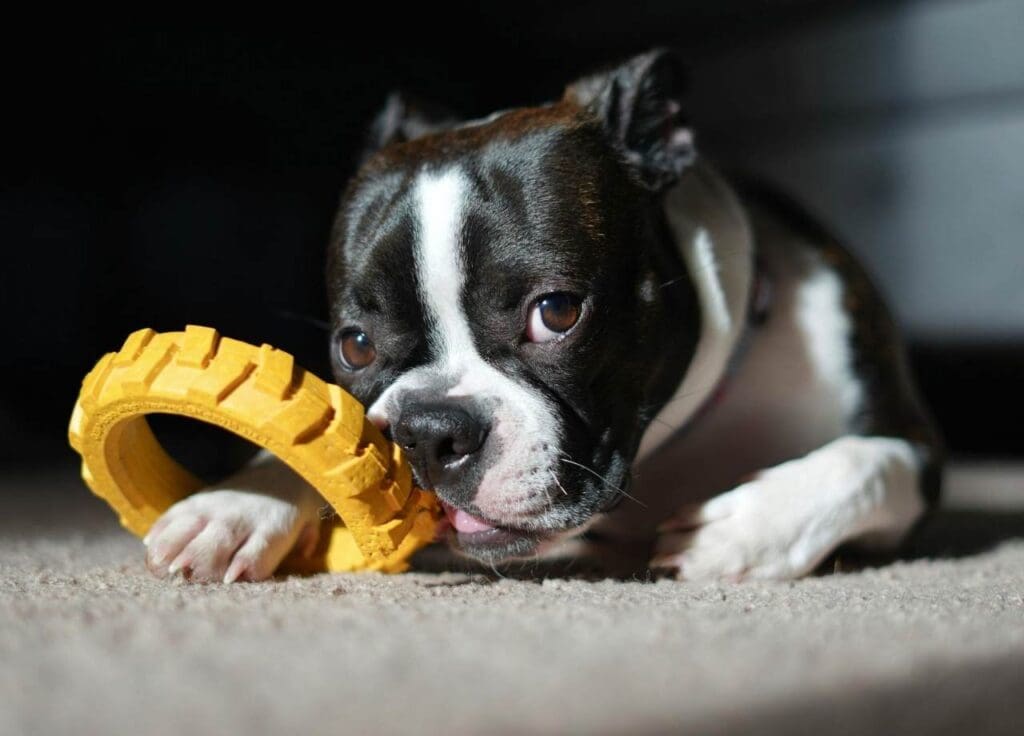
Chewing also triggers calming responses in the brain. Many dogs will relax significantly after spending time chewing on a safe toy. This is especially helpful for puppies, high energy dogs, or dogs experiencing mild anxiety.
Providing a variety of chew options can prevent boredom and help dogs rotate between different types of stimulation.
Rotating Toys to Keep Dogs Interested
One common mistake dog owners make is leaving all toys available at all times. While it may seem generous, this approach often leads to dogs losing interest quickly. When toys are constantly available, they stop feeling special.
Rotating toys keeps enrichment fresh and exciting. Instead of providing ten toys every day, try offering three or four and swapping them out every few days. When an old toy reappears after a short break, dogs often react as if it is brand new.
Toy rotation also helps owners observe which types of enrichment their dogs enjoy most. Some dogs prefer puzzles, while others are more motivated by scent games or chew toys.
At Animal Friends’ Pampered Paws, we regularly rotate enrichment activities so dogs experience new challenges during their visits. Variety keeps dogs curious and engaged.
Matching Toys to Your Dog’s Personality
Not every dog enjoys the same type of toy. Just like people, dogs have individual personalities and preferences. Understanding your dog’s natural tendencies can help you choose enrichment toys they will actually enjoy.
Dogs with strong food motivation usually excel with puzzle toys and food dispensers. Scent driven dogs often love snuffle mats and hide and seek games. Powerful chewers need durable toys designed specifically for heavy use.
Shy or nervous dogs may benefit from simpler enrichment that builds confidence gradually. Highly intelligent breeds often require more challenging toys to stay engaged.
Observing how your dog interacts with different toys can reveal a lot about their problem solving style. Some dogs use their noses first, others rely on their paws, and some approach challenges through persistent chewing.
Mental Enrichment Is an Everyday Need
Mental stimulation should not be viewed as an occasional activity. Just like exercise, it should be part of a dog’s daily routine. Even a few minutes of enrichment each day can make a noticeable difference in behavior and overall happiness.
Dogs that receive consistent mental challenges tend to be more relaxed at home, more confident in new environments, and more responsive during training. They are using their energy in productive ways.
At Animal Friends’ Pampered Paws, we believe that dogs deserve lives filled with both fun and purpose. Whether they are enjoying structured playtime in daycare, relaxing during a boarding stay, or exploring enrichment activities, our goal is always the same. We want every dog to feel engaged, comfortable, and mentally fulfilled.
Providing the right toys at home is a wonderful way to extend that enrichment into everyday life. A dog’s brain is an incredible tool. When we give them opportunities to use it, we help them live happier, healthier lives.