
There is a persistent myth in the dog world that once a dog reaches a certain age, learning stops. We hear it often from families across Bealeton, Warrenton, and Culpeper County. Someone adopts a seven year old Labrador or inherits a senior Beagle and assumes that obedience training is a young dog’s game. We could not disagree more.
At Animal Friends’ Pampered Paws, we have spent over 20 years caring for dogs of every age and temperament. From energetic puppies in our daycare programs to dignified seniors enjoying structured boarding stays, we see daily proof that learning does not expire. In fact, some of the most rewarding transformations we witness come from older dogs who are finally given clarity, consistency, and confidence through obedience training.
If you are considering obedience training for your older dog, we want you to know this: age is not the obstacle. Uncertainty, inconsistency, and lack of structure are. With the right approach, mature dogs often thrive in ways that surprise even their owners.
Why Older Dogs Can Absolutely Learn
The phrase “you can’t teach an old dog new tricks” has done more harm than good. While it may sound charming, it is simply not accurate. Dogs are lifelong learners. Their brains remain capable of forming new neural pathways well into their senior years.
In many cases, older dogs are actually easier to train than puppies. Puppies are impulsive, distractible, and fueled by boundless energy. Mature dogs, on the other hand, often have longer attention spans and a calmer demeanor. They may not bounce around during a training session. They are more likely to settle in and focus.
Older dogs also tend to bond deeply with their humans. If you have adopted a rescue or welcomed a dog into your family later in life, that dog is often especially motivated to connect. Training becomes more than learning commands. It becomes a language shared between you.
At our facility, we see how structure and gentle guidance help older dogs feel secure. Whether they are participating in supervised play during boarding or learning routines that build confidence, their behavior reflects a simple truth: dogs crave clarity at every age.
Common Reasons Owners Seek Obedience Training for Older Dogs
Families usually reach out about obedience training for older dogs for very specific reasons. Sometimes it is a new behavior that has developed over time. Sometimes it is an old habit that was tolerated for years but now feels unmanageable.
Pulling on the leash is a frequent concern. A dog who was once manageable may grow stronger or more reactive over time. Jumping on guests, barking excessively, or ignoring recall commands can also create frustration. In multi dog households, minor issues can escalate if boundaries are unclear.
Rescue dogs present a different but equally important scenario. Many older rescues have unknown histories. They may not have received consistent training in their early years. That does not mean they cannot learn. It simply means we need to approach training with patience and respect.
We also see families preparing for lifestyle changes. A move to a new home, the arrival of a baby, or increased travel can all prompt owners to seek more reliable obedience. Dogs feel transitions deeply. Giving them structure through training helps them adapt with less stress.
Understanding the Older Dog Mindset
Training an older dog requires empathy. Before you begin correcting behavior, you must understand why it is happening. Mature dogs have experiences that shape their responses. Some habits are reinforced over years. Others may be coping mechanisms.
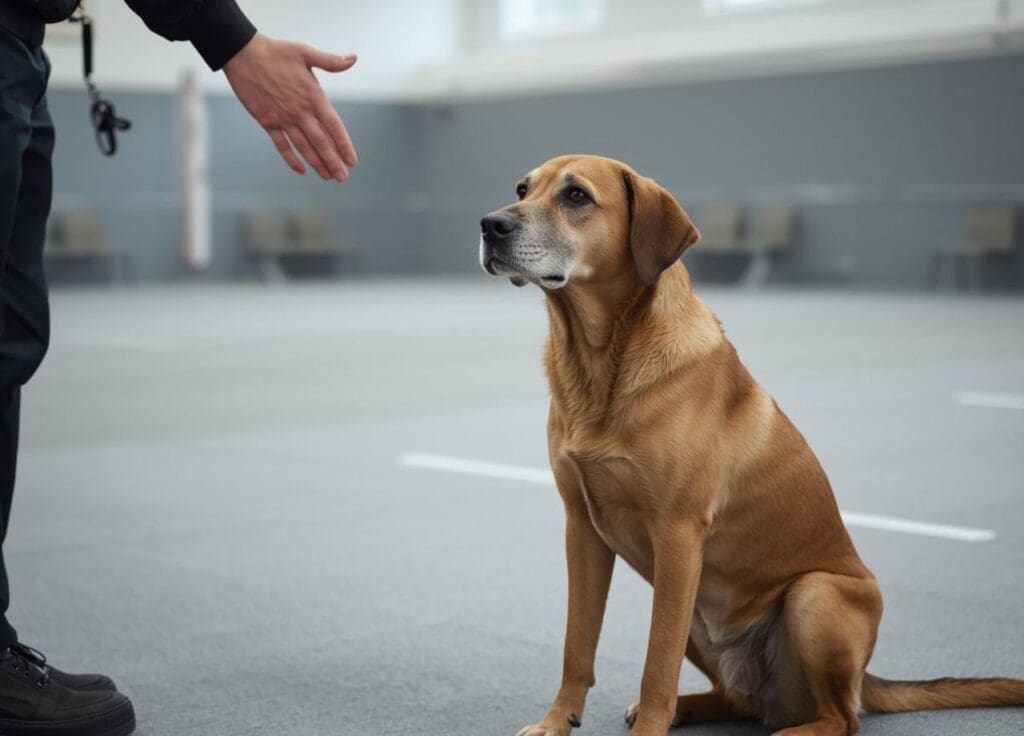
For example, a dog that barks at every passing car may have learned that barking makes the stimulus go away. A dog that guards food may have experienced competition in the past. Reactivity on walks can stem from anxiety rather than defiance.
Older dogs can also experience physical changes that affect behavior. Joint discomfort, reduced vision, or hearing changes can alter how they respond to cues. If your dog suddenly ignores a known command, consider whether the issue is physical rather than behavioral.
In our experience caring for senior dogs during boarding and extended stays, the dogs who thrive are those whose emotional and physical needs are acknowledged together. Obedience training is not about dominance. It is about communication and trust.
Setting Realistic Expectations
One of the most important conversations we have with pet parents is about expectations. Training an older dog is absolutely achievable, but it is not instant. It requires consistency and patience.
If a dog has rehearsed a behavior for five or six years, it will not disappear in a week. However, progress can be steady and meaningful. Small wins matter. A dog who reduces pulling by fifty percent is already on the path to full improvement.
We encourage families to think of obedience as a lifestyle rather than a short term project. Training should not only happen in formal sessions. It should be woven into daily routines. Asking for a sit before meals. Practicing calm behavior before opening doors. Reinforcing recall in the yard.
When structure becomes part of everyday life, older dogs adapt beautifully.
Training Methods That Work Best for Mature Dogs
Positive reinforcement remains the gold standard for obedience training at any age. Rewarding desired behaviors with treats, praise, or play builds motivation and confidence. Older dogs respond particularly well to this approach because it fosters trust rather than pressure.
Consistency is equally critical. Everyone in the household must use the same cues and expectations. If one person allows jumping while another corrects it, confusion follows. Clear, predictable responses from humans create clarity for dogs.
Short, focused sessions tend to be more effective than long drills. Ten to fifteen minutes of engaged training can accomplish more than an hour of scattered commands. Mature dogs appreciate structure, but they also appreciate pacing.
Environmental management plays a powerful role as well. If your dog struggles with distractions, begin training in a quiet space. Gradually increase challenges as reliability improves. Success builds confidence, and confidence reduces anxiety driven behaviors.
We often remind families that mental stimulation is just as important as physical exercise. Obedience training exercises the brain. For older dogs who may not run as tirelessly as they once did, mental work can be both fulfilling and tiring in a healthy way.
Addressing Specific Challenges in Older Dogs
Certain issues are especially common in older dogs. Leash reactivity, separation anxiety, and resource guarding tend to surface more frequently with age. Each requires a thoughtful, tailored approach.
Leash reactivity often improves when dogs are taught alternative behaviors. Teaching a focused heel, reinforcing eye contact, and practicing calm responses at controlled distances can gradually shift the dog’s default reaction.
Separation anxiety benefits from gradual desensitization. Short departures paired with positive associations help the dog learn that being alone is temporary and safe. Consistency is key. Abrupt, prolonged absences can undo progress.
Resource guarding should always be handled carefully. Punishment can escalate fear. Instead, structured exercises that build positive associations with human presence around valued items are more effective. If aggression is present, professional guidance is strongly recommended.
In our years of hands on experience, we have seen older dogs overcome behaviors that once felt overwhelming to their families. The common denominator is patience combined with structure.
The Emotional Benefits of Training Later in Life
Obedience training is not only about control. It is about connection. Older dogs often experience a renewed sense of purpose when they begin learning.
We have watched senior dogs who arrived withdrawn or uncertain become visibly more confident after consistent guidance. Their posture changes. Their engagement increases. They seek interaction rather than avoid it.
Training also deepens the human animal bond. When you communicate clearly and your dog responds, trust grows. That trust spills into other areas of life. Grooming becomes easier. Vet visits become less stressful. Even boarding stays feel more comfortable because the dog understands expectations.
For families in Bealeton, Midland, or Prince William County who rely on professional care during travel, a well trained dog transitions more smoothly into new environments. Familiar cues provide stability even when surroundings change.
When to Seek Professional Support
There is no shame in asking for help. In fact, it is often the most responsible decision you can make for your dog. If your older dog displays aggression, intense fear, or behaviors that feel unsafe, professional guidance is essential.
Even for less severe issues, structured programs can accelerate progress. A professional trainer brings objectivity and experience. They can identify subtle patterns that owners may overlook. They can also design step by step plans tailored to your dog’s age, health, and temperament.
At Animal Friends’ Pampered Paws, we believe deeply in continuing education for both pets and their people. Whether through structured activities, supervised play, or guidance during extended stays, we see firsthand how consistency and professional insight make a lasting difference.
Practical Steps to Start Today
If you are ready to begin obedience training with your older dog, start small. Choose one behavior to focus on. Practice daily in short sessions. Reward generously for effort and improvement.
Ensure your dog is physically comfortable. Schedule a veterinary check if you suspect pain or sensory changes. A comfortable dog learns more easily than one coping with discomfort.
Establish clear routines. Dogs of all ages thrive on predictability. Feed at consistent times. Walk on a schedule. Reinforce calm behavior before exciting activities.
Most importantly, approach training with optimism. Your dog does not measure their age against their potential. They measure it against your guidance and consistency.
Final Thoughts: Growth Has No Expiration Date
We have cared for thousands of dogs over the past two decades, and one truth stands out above all others. Dogs do not stop learning because they get older. They stop learning when we stop teaching.
Obedience training for older dogs is not about correcting the past. It is about shaping the future. It is about giving your dog the tools to navigate life with confidence and clarity.
If you are in Virginia and considering ways to improve your older dog’s behavior, know that progress is possible. With patience, structure, and a compassionate approach, your senior companion can continue to grow, adapt, and thrive.
And as always, if you need guidance or support, our team is here to help you and your dog feel safe, understood, and set up for success.