
Bringing a puppy home is one of those life moments that stays with you forever. There is excitement, laughter, a little chaos, and a deep sense of responsibility that settles in almost immediately. At Animal Friends’ Pampered Paws, we have spent decades watching puppies grow into confident, well-mannered adult dogs, and if there is one question we hear more than almost any other, it is this: When should a puppy start obedience training?
The short answer surprises many people. Training does not start when your puppy is older, calmer, or easier to manage. It starts much earlier, and in many ways, it starts the moment your puppy comes home. That belief guides how we approach everything from early puppy socialization to our structured training programs. Even when families first come to us for boarding or daycare, training is already part of the conversation because good habits and clear communication shape every experience a dog has away from home.
Obedience training is not about creating a robot that follows commands without thinking. It is about teaching a young dog how to live successfully in a human world. Knowing when to begin is just as important as knowing how to begin.
The Ideal Age to Start Puppy Obedience Training
From a professional training standpoint, puppies are capable of learning far earlier than most people realize. The ideal window to begin intentional obedience training is around seven to eight weeks of age. This is typically when puppies are settling into their new homes and forming their first strong associations with people, routines, and environments.
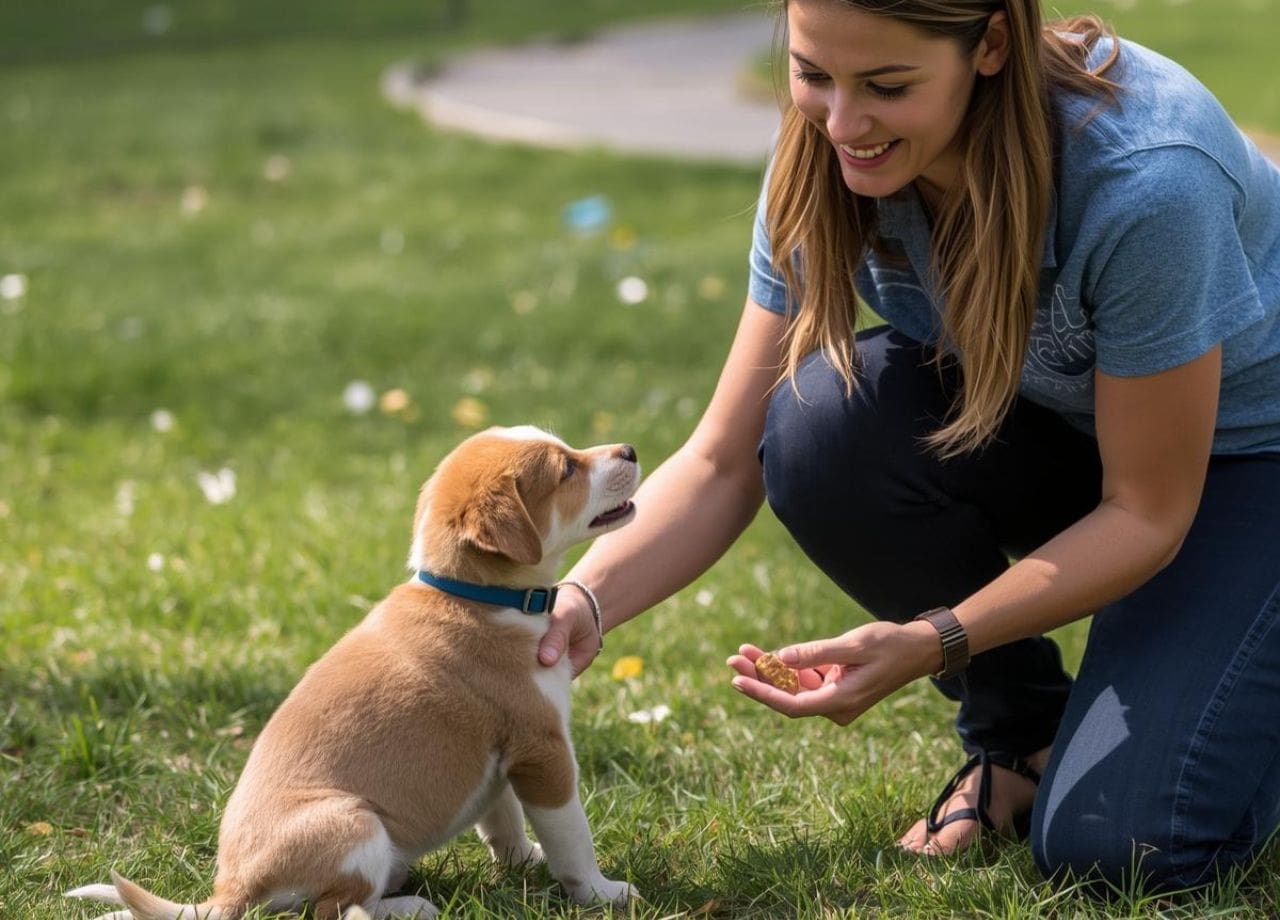
At this age, training does not look like formal drills or long sessions. It looks like short, positive interactions that teach a puppy how to respond to their name, how to engage with people, and how to start understanding simple cues. Their brains are remarkably open during this period. They are absorbing information constantly, whether we are teaching intentionally or not.
Waiting until a puppy is four, five, or six months old to begin training often means undoing habits that have already formed. Puppies are always learning. If no one is guiding that learning, they will still figure things out on their own, and not all of those conclusions work well in a household setting.
Why Early Training Is About More Than Commands
Many people associate obedience training with cues like sit, stay, and come. While those behaviors matter, early training is really about communication and trust. A puppy that starts training early learns that humans are consistent, predictable, and worth paying attention to.
This early learning stage is when puppies develop emotional responses to new situations. How they feel about handling, new sounds, unfamiliar dogs, and changes in routine is shaped now. Gentle training sessions help puppies learn to think instead of panic. That skill carries into adulthood more than any single command ever will.
From our perspective, dogs that begin training early tend to be more adaptable in group environments like daycare or boarding. They recover faster from excitement, listen better in stimulating spaces, and show more confidence overall. These traits are not accidental. They are the result of early guidance paired with positive experiences.
Understanding Developmental Stages in Puppies
To truly answer when a puppy should start obedience training, it helps to understand what is happening developmentally.
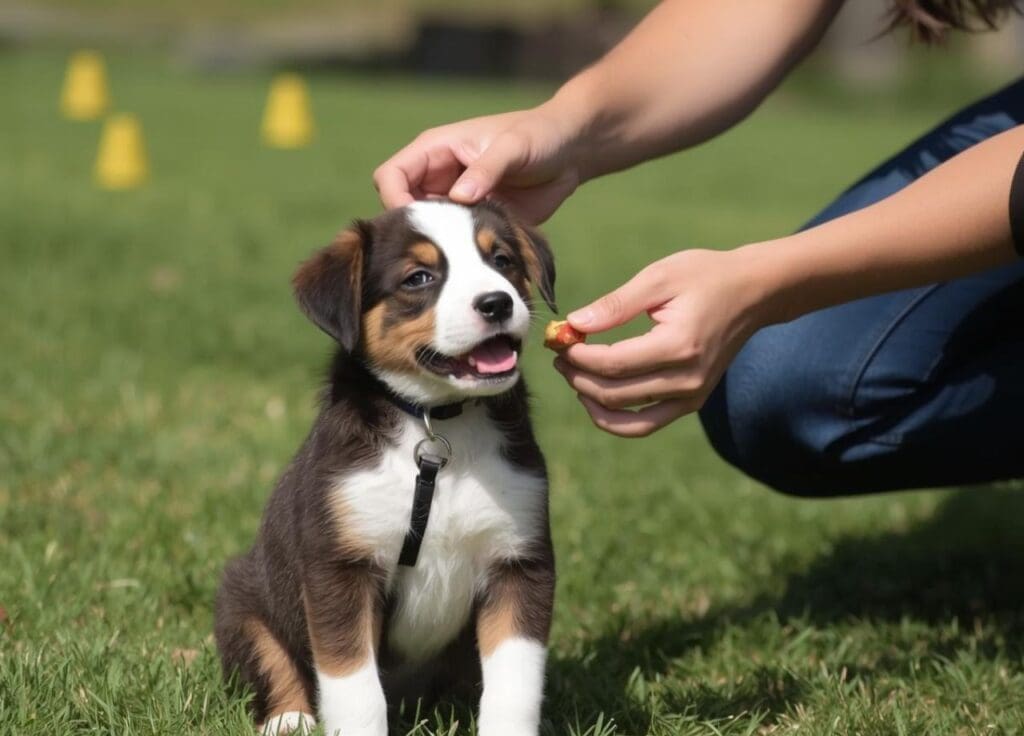
Between seven and twelve weeks, puppies are in a critical learning window. This is when their brains are most flexible and open to forming new associations. Experiences during this time leave a lasting imprint. Positive exposure builds resilience. Negative or overwhelming experiences can create fear that takes much longer to address later.
From three to six months, puppies become more curious and independent. They test boundaries and explore their environment with confidence. Training during this stage helps channel that curiosity into appropriate behaviors. Puppies that started earlier usually move through this phase with fewer struggles because they already understand how learning works.
After six months, adolescence begins. Hormones, distractions, and selective hearing often show up right on schedule. Training is still very effective at this stage, but it works best when there is already a foundation in place. Starting from scratch during adolescence is possible, but it requires more patience and consistency.
What Puppy Obedience Training Should Look Like Early On
Early obedience training should feel natural, light, and enjoyable for both puppy and owner. Sessions are short, often just a few minutes at a time, repeated throughout the day. Puppies learn best in small doses when they are not tired or overstimulated.
At this stage, training focuses on engagement. Teaching a puppy to respond to their name, to make eye contact, and to follow simple guidance builds the groundwork for everything else. Skills like sitting politely, walking calmly on a leash, and settling when asked come later, but the building blocks start immediately.
We strongly believe that early training should never rely on fear, force, or frustration. Puppies learn fastest when they feel safe and successful. Confidence is built one small win at a time.
The Role of Socialization in Obedience Training
Obedience training and socialization are deeply connected. A puppy that has only learned cues in a quiet living room may struggle to respond in the real world. Exposure to new people, environments, surfaces, sounds, and other dogs teaches puppies how to think clearly even when distractions are present.
Socialization does not mean overwhelming a puppy with constant activity. It means thoughtful exposure paired with support. When puppies learn that unfamiliar experiences are manageable, they carry that confidence into training sessions as well.
In our experience, puppies that participate in structured environments like supervised daycare or early training programs tend to develop stronger emotional balance. They learn how to regulate excitement, read social cues, and respond to guidance from different people. Those skills support obedience training in ways that are difficult to replicate at home alone.
Common Mistakes Owners Make When Delaying Training
One of the most common reasons people delay obedience training is the belief that a puppy is too young to learn. In reality, puppies are never too young to start learning. They are only too young for unrealistic expectations.
Another common mistake is waiting for problem behaviors to appear before seeking training. By the time jumping, nipping, pulling on the leash, or ignoring recall become frustrating, those behaviors have often been practiced hundreds of times. Early training prevents many of these issues from becoming habits in the first place.
Some owners also underestimate how quickly puppies grow. What feels manageable at ten pounds can become overwhelming at fifty. Training early ensures that size and strength do not outpace manners and control.
How Professional Training Supports Early Success
While training at home is essential, professional guidance adds structure and clarity that many families appreciate. A professional trainer understands how to read puppy body language, adjust timing, and tailor methods to individual temperaments.
From a business perspective, we see training as part of a larger care philosophy. Dogs that understand expectations experience less stress when they are away from home. They settle more easily, interact more positively, and enjoy their time with us more fully. That is why training fits so naturally alongside services like boarding and daycare.
Professional training also supports owners. Clear instruction and consistent feedback help families feel confident in what they are doing. That confidence transfers directly to the puppy.
Is It Ever Too Late to Start Obedience Training?
While early training offers clear advantages, it is never too late to begin. Older puppies and adult dogs can absolutely learn new behaviors and improve existing ones. The process may take longer, and it may require addressing ingrained habits, but meaningful progress is always possible.
That said, starting early makes the journey smoother for everyone involved. Puppies that learn how to learn early tend to enjoy training throughout their lives. They see it as a shared activity rather than a correction process.
Our Perspective After Years of Working With Puppies
After more than twenty years of caring for and training dogs, our perspective is shaped by thousands of individual stories. We have watched shy puppies grow into confident companions. We have seen energetic puppies learn how to settle and focus. In nearly every case, early guidance made the difference.
When people ask us when a puppy should start obedience training, we think less about a specific date and more about mindset. Training starts when you begin teaching your puppy how to succeed in your world. The earlier that guidance begins, the stronger the foundation becomes.
A well-trained dog is not just easier to live with. They are more relaxed, more secure, and more connected to their people. That outcome starts with early, thoughtful obedience training rooted in patience, consistency, and genuine care.