
When you spend as much time with dogs as we do, you start to notice patterns. Some dogs light up at the sight of water, others approach it with cautious curiosity, and a few would rather keep all four paws firmly on dry land. Over the years, we’ve come to understand that a swimming pool is not just a feature. It is an experience, a tool for enrichment, and in many cases, an important part of a dog’s physical and emotional well-being.
At Animal Friends’ Pampered Paws, we’ve seen firsthand how structured water play can transform a dog’s day. It is one of the reasons our swimming sessions are such a valued part of our care offerings. But choosing the right swimming pool for dogs, whether for a professional facility or a private home, is not as simple as filling a hole with water. It requires thoughtful consideration, safety awareness, and a genuine understanding of how dogs interact with their environment.
Understanding Why Swimming Matters for Dogs
Swimming is often described as one of the best forms of exercise for dogs, and that is not an exaggeration. It provides a full-body workout without placing stress on joints, which is especially important for aging dogs or breeds prone to hip and joint issues. Beyond the physical benefits, water can also serve as a mental reset. Dogs that are anxious, high-energy, or easily overstimulated often find a sense of calm and focus in the water.
From our perspective, swimming is not just about exercise. It is about giving dogs a safe space to explore, build confidence, and engage in natural behaviors. Retrievers, spaniels, and many working breeds have an instinctive relationship with water, but even dogs without that background can learn to enjoy it with the right introduction and environment.
That brings us to the most important point. The pool itself plays a major role in shaping that experience.
Pool Size and Depth: Matching the Dog, Not the Space
One of the most common mistakes we see is choosing a pool based on available space rather than the needs of the dogs who will use it. A large pool may look impressive, but if it is too deep or difficult to navigate, it can create anxiety instead of enjoyment.
Dogs need a gradual entry point. Sudden drop-offs can be intimidating and even dangerous, especially for first-time swimmers. A well-designed pool includes a sloped or stepped entry that allows dogs to ease into the water at their own pace. This builds confidence and reduces the likelihood of panic.
Depth is another critical factor. While some dogs enjoy deep water where they can fully swim, others prefer shallower areas where they can stand and paddle. Ideally, a pool should offer a range of depths to accommodate different comfort levels and sizes. In our experience, versatility in depth makes a pool far more usable and inclusive.
Surface Materials and Safety Considerations
The surface around and inside the pool is just as important as the water itself. Dogs do not move like humans. They run, pivot, leap, and sometimes lose their footing. Slippery surfaces can quickly turn a fun activity into a dangerous situation.
We always advocate for non-slip materials both in and around the pool. Textured finishes provide traction and help dogs feel secure as they enter and exit the water. This is especially important for older dogs or those with mobility challenges.
Equally important is the edge design. Sharp corners or hard edges can lead to injuries during play. Rounded edges and thoughtful construction reduce risks and create a more forgiving environment for active dogs.
Fencing and supervision also play a role in overall safety. Even the best-designed pool should never be accessible without oversight. Dogs are naturally curious, and an unsupervised pool can pose serious risks.
Water Quality and Maintenance
Clean water is not optional. It is essential. Dogs introduce dirt, fur, oils, and sometimes even bacteria into the water, which means a standard residential approach to pool maintenance often falls short.
Chemical balance is another area where careful attention is needed. Harsh chemicals can irritate a dog’s skin and eyes, while insufficient treatment can allow harmful bacteria to thrive. Striking the right balance requires consistency and knowledge.
From our standpoint, maintaining water quality is part of responsible care. It reflects a commitment to the dogs’ well-being, not just the aesthetics of the pool.
Temperature Control and Seasonal Use
Water temperature is often overlooked, but it has a significant impact on how dogs experience swimming. Water that is too cold can be uncomfortable or even harmful, particularly for smaller breeds or dogs with short coats. On the other hand, overly warm water can lead to fatigue and dehydration.
An ideal pool maintains a moderate temperature that supports extended, comfortable use. In professional settings, this often involves heating systems or careful seasonal planning. For home setups, it may mean limiting swim time during cooler months or providing warm-up options after swimming.
We have found that dogs are far more likely to engage positively with water when the temperature feels inviting. It is a simple detail, but one that makes a meaningful difference.
Accessibility for All Dogs
Not every dog approaches a pool with enthusiasm. Some need time, encouragement, and a sense of control over the situation. Accessibility features can make that transition much smoother.
Ramps, wide steps, and clearly defined entry points help dogs understand how to get in and out of the water. This reduces hesitation and builds trust. For dogs with physical limitations, these features are not just helpful, they are essential.
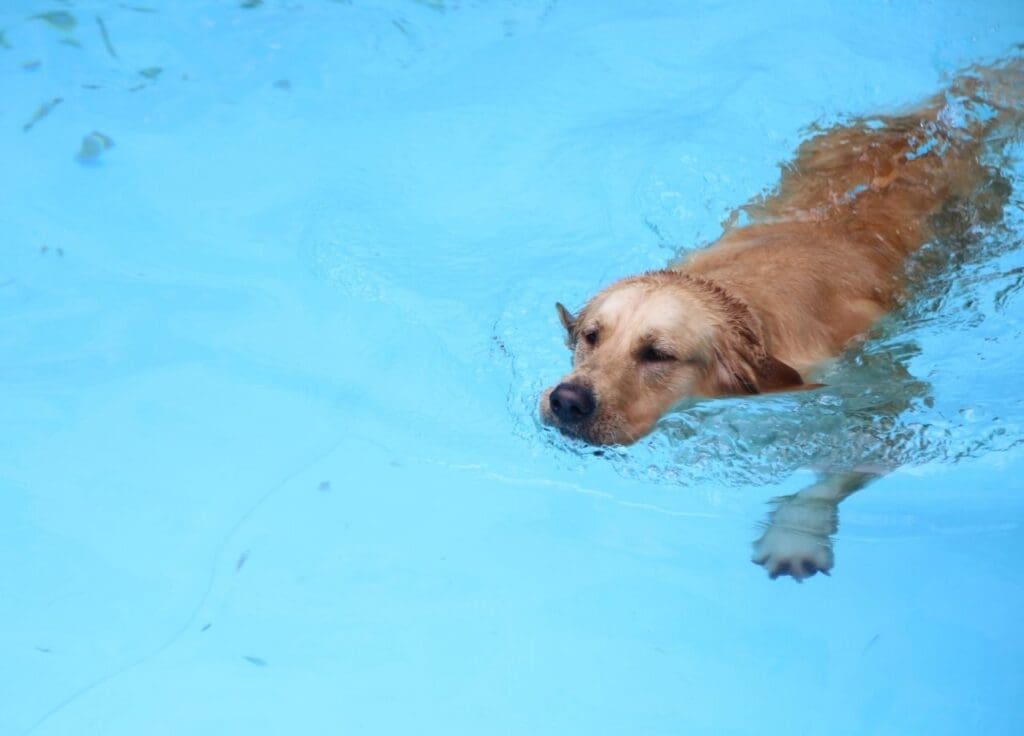
We have worked with dogs who were initially hesitant around water but gradually became confident swimmers. In almost every case, the design of the pool played a role in that transformation. When a dog feels safe, curiosity takes over.
The Role of Supervision and Structured Play
Even with the perfect pool, the human element remains critical. Dogs do not always recognize their own limits. They may continue swimming long after they are tired or engage in overly rough play with other dogs.
Supervision ensures that swimming remains a positive experience. It allows for intervention when needed and helps guide dogs toward healthy behaviors. Structured play sessions can also enhance the experience by providing direction and variety.
At our facility, swimming is never a free-for-all. It is a managed activity that balances fun with safety. That approach has proven to be the most effective way to ensure dogs benefit from their time in the water.
Choosing Between Above-Ground and In-Ground Pools
For those considering adding a pool at home, the decision often comes down to above-ground versus in-ground options. Each has its advantages, but the choice should be guided by how the pool will be used.
Above-ground pools can be more affordable and easier to install, but they often lack the accessibility features that dogs need. Getting in and out can be challenging, and modifications may be required to make them safe.
In-ground pools offer greater flexibility in design, including gradual entry points and varied depths. They tend to provide a more natural and intuitive experience for dogs, but they also require a larger investment in both construction and maintenance.
From our experience, the best choice is the one that prioritizes safety and usability over convenience.
Integrating Swimming into a Dog’s Routine
A pool is not just a standalone feature. It works best when it is part of a broader routine that includes exercise, rest, and social interaction. Swimming can complement activities like daycare play, training sessions, and structured walks.
Dogs thrive on variety. A day that includes time in the water, time with other dogs, and time to rest creates a balanced experience that supports both physical health and emotional well-being.
We often see dogs return home after a day that includes swimming with a sense of calm satisfaction. They are not just tired, they are fulfilled. That is the goal.
Final Thoughts: Building the Right Experience
Choosing the right swimming pool for dogs is not about following trends or copying what looks good in photos. It is about understanding dogs on a deeper level and creating an environment that supports their needs.
Every detail matters. The slope of the entry, the texture of the surface, the clarity of the water, and the presence of attentive supervision all contribute to the overall experience. When these elements come together, the result is more than just a pool. It becomes a place where dogs can thrive.
From our perspective, that is what makes the investment worthwhile. Whether you are considering a pool for your home or evaluating a facility, take the time to look beyond the surface. Think about how a dog will feel, move, and respond in that space.
If you get that right, the rest tends to fall into place.