
At Animal Friends’ Pampered Paws, we spend a lot of time around dogs in water. Some arrive unsure, some leap in like they were born for it, and others fall somewhere in between. Water play is part of how many dogs relax, exercise, and simply enjoy being dogs. Because of that, one of the most common questions we hear from pet parents is whether chlorine pools are actually safe for their dogs.
The short answer is yes, dogs can swim in properly maintained chlorine pools. But the more honest answer is that it depends on how the pool is managed, how long your dog is in the water, and how attentive you are before and after the swim. We’ve seen firsthand how beneficial swimming can be for dogs when done correctly, especially in structured environments like our supervised swim sessions, but we have also seen the small issues that come from skipping the details.
This is not about fear or restriction. It is about understanding what is happening in that water and how to keep your dog safe, comfortable, and happy every time they take a swim.
Understanding Chlorine and How It Affects Dogs
Chlorine is used in pools to kill bacteria and keep water safe for swimmers. That applies to both humans and dogs. When chlorine levels are balanced correctly, the water is not harmful in small exposures. Dogs, like people, can tolerate it well for occasional swimming sessions.
Where problems begin is when chlorine levels are too high or when exposure is prolonged. Dogs do not just swim in pools. They drink from them, they inhale water while playing, and they stay submerged longer than most people would. Their fur and skin also respond differently to chemical exposure.
A dog’s coat can trap chlorinated water against the skin, especially in thicker or double-coated breeds. Over time, this can lead to dryness, itchiness, or irritation. It is not immediate in most cases, but repeated exposure without proper care adds up.
Another factor is that dogs are far less likely to avoid drinking pool water. Even a well-balanced pool should not be treated as a drinking source. Small amounts are usually not dangerous, but frequent ingestion can lead to stomach upset or mild gastrointestinal issues.
Is Pool Swimming Good for Dogs Overall?
When done properly, swimming is one of the best low-impact exercises for dogs. It supports joint health, builds muscle, and allows high-energy dogs to burn off energy without stressing their bodies.
We often see dogs benefit from water activities in ways that traditional exercise does not offer. Older dogs move more comfortably in water. Younger dogs gain confidence and coordination. Dogs that are recovering from physical strain can maintain activity without overexertion.
However, the environment matters. A calm, supervised swimming area is very different from an unsupervised backyard pool session where the dog is left to figure things out alone. Structure, supervision, and safe entry and exit points all play a role in making swimming beneficial rather than risky.
Common Concerns About Chlorine Pools
Skin and Coat Irritation
One of the first things owners notice after repeated swimming is a change in their dog’s coat. It may feel dry, lose some shine, or even develop a slightly rough texture. In some dogs, especially those with sensitive skin, mild irritation can appear.
This does not mean chlorine pools are inherently unsafe. It means the coat and skin need support. Rinsing your dog with clean water immediately after swimming makes a noticeable difference. It removes residual chlorine before it can sit on the skin for hours.
We also recommend keeping an eye on scratching, redness, or excessive licking after swim sessions. These are early signs that your dog may need shorter swim times or more thorough post-swim care.
Ear Health and Water Exposure
Dogs that swim frequently are more prone to ear issues if water remains trapped in the ear canal. Chlorinated water itself is not the only concern. Moisture combined with warmth creates an environment where infections can develop.
Drying your dog’s ears gently after swimming is one of the simplest preventative steps you can take. For breeds with floppy ears, this is especially important since airflow is limited.
In our experience, ear care is one of the most overlooked parts of post-swim routines, yet it is one of the most impactful for long-term comfort.
Drinking Pool Water
Dogs will drink pool water if given the chance. It is instinctive, especially during play. While a few mouthfuls are unlikely to cause harm, repeated drinking can lead to digestive upset.
The solution is straightforward. Always provide fresh, clean drinking water nearby and encourage your dog to use it. Taking short breaks during swim time helps reduce the urge to drink from the pool.
This is something we actively manage during supervised swim sessions because we have seen how quickly enthusiastic dogs will default to whatever water source is closest.
Eye Sensitivity
Some dogs may experience mild eye irritation after swimming in chlorinated water. Redness or slight squinting can occur, particularly in dogs with more sensitive eyes.
In most cases, this resolves quickly on its own. If it persists or becomes frequent, limiting swim duration and rinsing the face gently with fresh water can help.
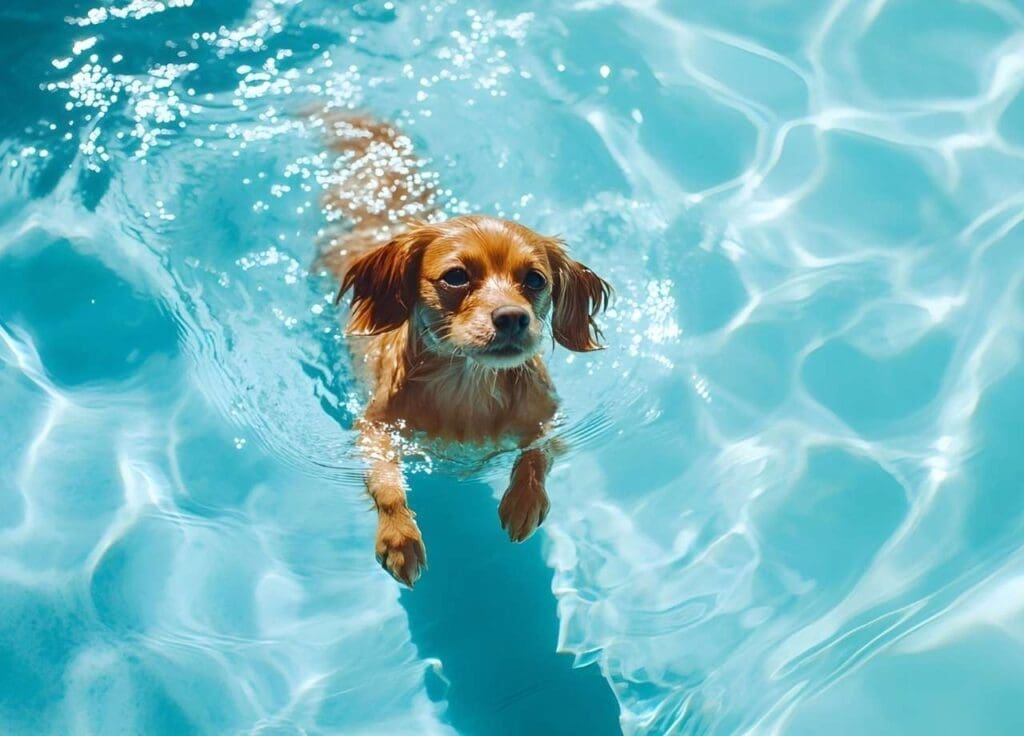
Again, these are not signs that chlorine pools are unsafe. They are reminders that each dog responds differently and adjustments may be needed.
How to Safely Let Your Dog Swim in a Chlorine Pool
Check Pool Maintenance First
Before your dog ever enters the water, the pool itself needs to be properly maintained. Chlorine levels should be within the normal range used for human swimming pools. Over-chlorinated water is where most problems begin.
If the pool smells strongly of chlorine, that is often a sign that something is off with the chemical balance. A well-maintained pool should not have an overwhelming chemical odor.
Clear water, balanced pH levels, and consistent maintenance are non-negotiable if dogs are going to swim safely.
Limit Swim Time
Dogs do not always know when to stop. Excitement can override fatigue, especially in water-loving breeds. Short, controlled swim sessions are far better than long, unstructured ones.
We recommend starting with 10 to 15 minutes and adjusting based on your dog’s comfort and experience. Over time, you will learn what duration works best for your dog.
Rinse Immediately After Swimming
This is one of the most important habits you can build. Rinsing your dog with fresh water removes chlorine residue from the coat and skin. It reduces dryness, prevents irritation, and keeps your dog more comfortable overall.
This is one of the most important habits you can build. Rinsing your dog with fresh water removes chlorine residue from the coat and skin. It reduces dryness, prevents irritation, and keeps your dog more comfortable overall.
A quick rinse makes a significant difference, even after a short swim.
Provide a Safe Exit
Not all dogs instinctively understand how to exit a pool. This is a serious safety concern. Every dog should be shown a clear, easy way out of the water before they begin swimming freely.
Ramps or wide steps are ideal. Repetition and guidance help your dog build confidence and avoid panic situations.
Supervise at All Times
No dog should be left alone in a pool environment. Even strong swimmers can become tired or disoriented. Supervision is not just about preventing accidents. It is about reading your dog’s behavior and stepping in before small issues become bigger ones.
This is something we emphasize strongly in our own environment. Water should always be a positive experience, and that only happens when someone is paying attention.
Are Some Dogs Better Suited for Pool Swimming?
Not every dog is naturally comfortable in water. While some breeds are known for their love of swimming, individual personality matters just as much as breed tendencies.
Short-nosed breeds may struggle with breathing while swimming. Smaller dogs can tire quickly. Dogs with joint issues may benefit greatly from swimming, but only when introduced carefully.
Confidence plays a major role. Dogs that are introduced gradually, with encouragement and structure, tend to develop a healthy relationship with water. Those that are pushed too quickly may develop hesitation or anxiety.
We have seen hesitant dogs become enthusiastic swimmers with the right approach. It is not about forcing the experience. It is about guiding it.
When to Avoid Chlorine Pools
There are times when swimming in a chlorine pool is not the best option. Dogs with open wounds, recent surgeries, or active skin conditions should stay out of chlorinated water until fully healed.
Similarly, dogs that are already experiencing ear infections or significant skin irritation should avoid swimming until those issues are resolved.
If your dog shows consistent negative reactions after swimming, such as ongoing itching, redness, or digestive upset, it may be worth reconsidering how often they swim or exploring alternative water options.
Our Perspective as a Care Provider
From where we stand, swimming is one of the most rewarding activities we can offer dogs when it is done thoughtfully. It brings out joy, builds confidence, and supports physical health in ways few other activities can.
Chlorine pools are not something to fear, but they do require awareness. The difference between a great experience and a problematic one often comes down to preparation, supervision, and follow-through.
Chlorine pools are not something to fear, but they do require awareness. The difference between a great experience and a problematic one often comes down to preparation, supervision, and follow-through.
Final Thoughts
So, can dogs swim in chlorine pools? Yes, they can. And many absolutely love it. But the real question is whether they should, and the answer depends on how responsibly the experience is managed.
When pool conditions are right, swim time is controlled, and proper care is taken afterward, chlorine pools can be a safe and enjoyable outlet for your dog’s energy and curiosity.
If you are ever unsure, start slowly, observe your dog closely, and adjust as needed. Dogs are incredibly good at telling us what works for them if we are paying attention.
And when swimming is done right, it becomes more than just exercise. It becomes something your dog looks forward to, every single time.