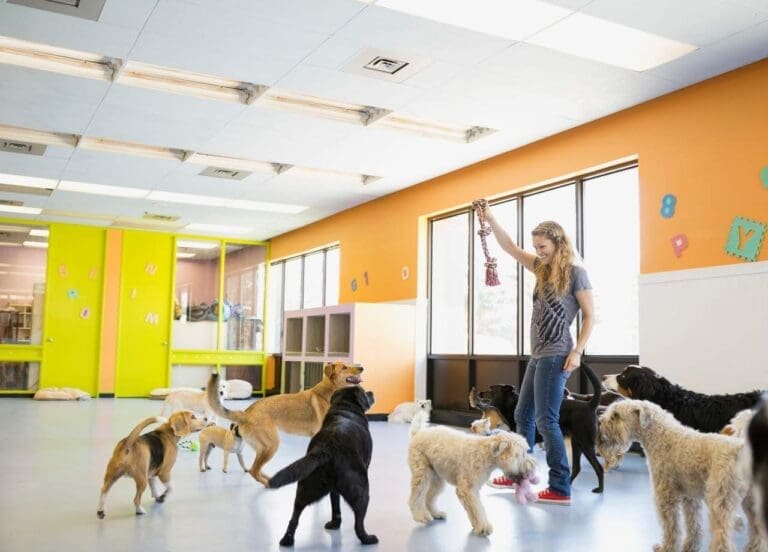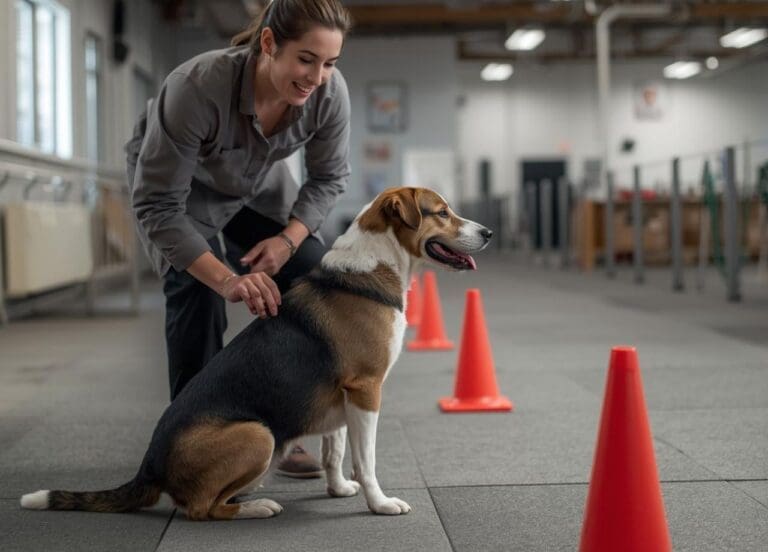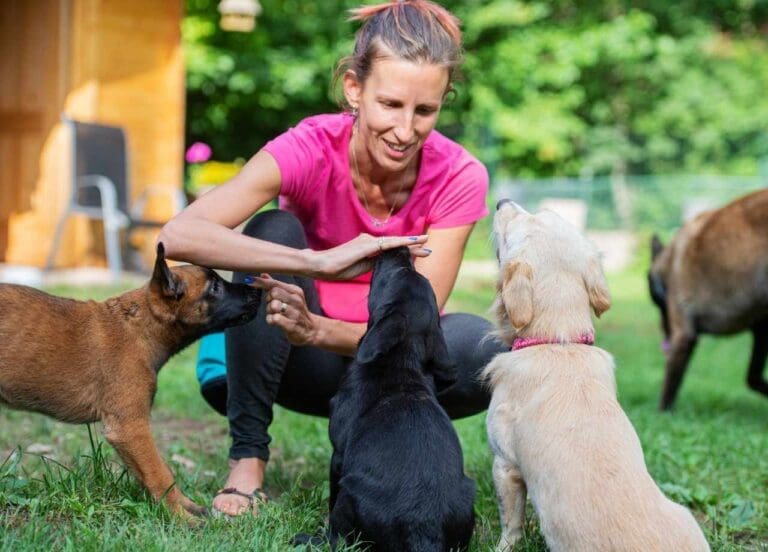


Many of the dogs who stay with us at Animal Friends Pampered Paws arrive with some degree of separation anxiety. Some show it the moment they step out of the car. Others keep a brave face until their family walks back through the gate. Either way, our team has spent more than twenty years watching anxious dogs transform into confident, relaxed guests once they learn the boarding environment is safe, predictable, and full of patient humans who understand them. Boarding is not a one size fits all experience, especially for anxious dogs, and that is precisely why we take a personalized approach across all our services, whether a dog is enjoying our Water Dog package or simply settling into their standard boarding suite.
Dog daycare pricing can seem confusing at first glance. In one town, you might see $25 per day; in another, $45 or more. The truth is, many different factors influence what you pay — and understanding those helps you recognize the difference between basic care and truly exceptional care.
Understanding What Separation Anxiety Really Is
Before deciding how to board a dog with separation anxiety, it helps to understand what is actually happening inside the anxious mind. A dog who panics when their person leaves is not being stubborn or dramatic. Their stress response is activated in a very real physiological way. Cortisol rises, breathing quickens, and the dog’s ability to think clearly narrows. Some dogs pace or bark. Others shut down entirely. Still others try to escape, not because they want to wander, but because they want to get back to the source of their security.
This is why boarding can feel intimidating for families. Handing the leash to someone else feels like handing away your dog’s safety net. Yet the boarding environment can actually help reduce anxiety through structure. Predictable routines, professional handlers, and consistent caregiver attention can give anxious dogs a sense of stability they sometimes struggle to find at home when left alone. Many of our guests with separation anxiety end up thriving here because they are rarely without the presence of people or other dogs, and the rhythm of each day becomes comforting.
Understanding the emotional mechanics of anxiety also helps families communicate effectively with boarding staff. If you can describe your dog’s stress signals and what tends to help them settle, your boarding provider can build an individualized care plan. These conversations are not about labeling a dog as anxious. They are about giving the care team what they need to support that dog with compassion and clarity.
Preparing Your Dog Before the Boarding Stay
One of the most valuable steps you can take is to begin acclimating your dog to the idea of being away from you before the actual stay. This preparation does not have to be elaborate. Short practice sessions can make a world of difference. For example, if your dog struggles every time you leave a room, start with brief, low pressure absences around the house. Step outside for a few seconds, return calmly, and let your dog experience that separation does not equal loss.
The same principle applies to leaving your dog with trusted people. If you have friends or family who can watch your dog for a half hour while you run an errand, use that opportunity. The goal is not to trigger anxiety. It is to help your dog experience separations that are easy. Small wins build the ladder to bigger wins, like a boarding stay.
We also suggest introducing your dog to environments similar in energy to the boarding facility. Many anxious dogs relax significantly after attending a supervised play session or daycare visit before their first overnight. The exposure to new sounds, smells, and humans softens the shock of their first boarding check in. By the time they return for their actual stay, the environment is not unfamiliar. It is simply the next chapter of a story they have already begun.
Families sometimes underestimate how much their own emotions shape the dog’s perception of boarding. Dogs are masters at reading tension. If you approach boarding day with guilt or worry, your dog registers that conflict. Conversely, when families communicate confidence and calm, anxious dogs often mirror that state. You are not pretending everything is fine. You are modeling steadiness so your dog can borrow some of it.
Creating a Thoughtful Drop Off Experience
Drop off day is where the emotional tone of the stay is set. A rushed, chaotic goodbye makes anxious dogs feel the shift instantly. We always recommend giving yourself extra time on drop off day so you are not hurried. Your dog picks up on hurry, and hurry feels like danger.
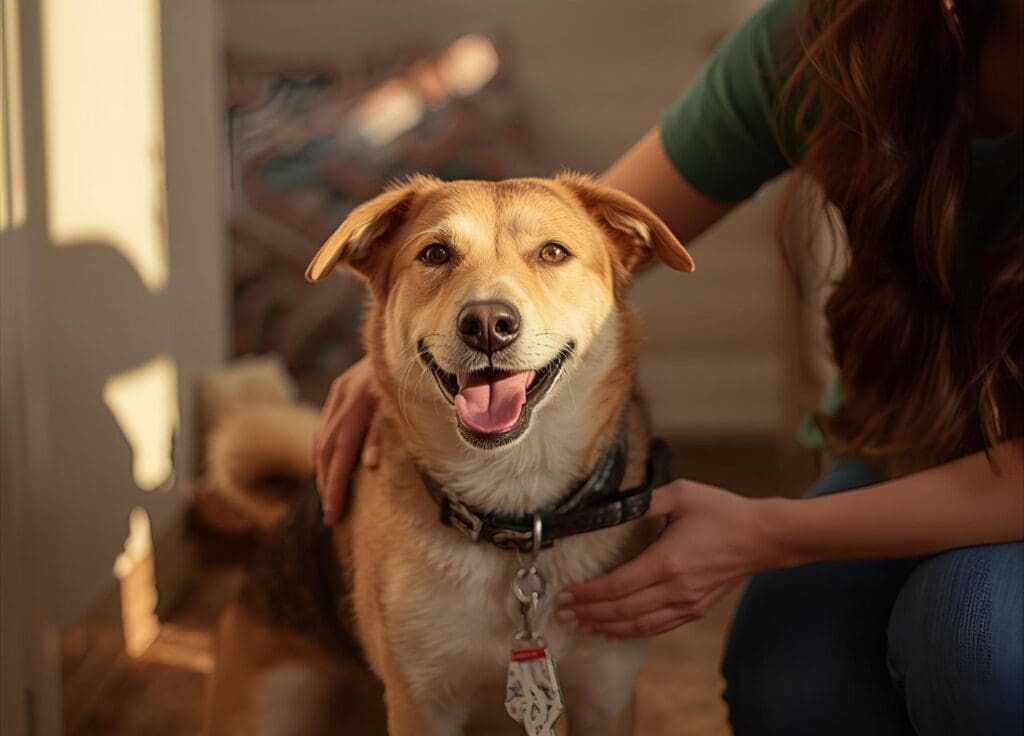
When you arrive, use a warm but steady tone. You can acknowledge your dog, but avoid long, drawn out goodbyes. These tend to escalate anxiety rather than soothe it. What anxious dogs need in that moment is a smooth handoff to the caregiver. The quicker they transition into the rhythm of their new environment, the faster their nervous system settles.
Bringing familiar items can also help, but families should choose them wisely. A blanket, a favorite toy, or a worn t-shirt can offer a grounding scent. Just avoid bringing large numbers of items that may clutter the space or items your dog guards possessively at home. Controlled familiarity is soothing. Too much familiarity can actually make some anxious dogs fixate and struggle to integrate into their boarding routine.
Good boarding facilities will help families step through the transition with care. Staff members should move at the dog’s pace, offer reassurance through calm body language, and immediately establish the dog’s sense of place within the environment. In our case, for example, we often give anxious dogs a quiet moment to decompress before introducing them to a play yard or neighbor. This lets them catch their breath, literally and emotionally.
How Professional Care Eases Anxiety During the Stay
A well run boarding facility is built around structure, observation, and individualized care. These three elements are especially important for dogs with separation anxiety. Structure gives the dog a predictable rhythm. Observation allows caregivers to notice subtle stress signals before they escalate. Individualized care ensures that no anxious dog gets lost in the shuffle of a busy operation.
Throughout the day, anxious dogs benefit from consistent social interaction. Whether they participate in group activities, enjoy one on one enrichment, or alternate between indoor and outdoor environments, the presence of engaged humans is grounding. Many dogs with separation anxiety feel most secure when they can see or hear people nearby, and a professionally staffed facility provides that near constant presence.
Movement also plays a large role in reducing anxiety. Exercise, fresh air, and mental stimulation help channel nervous energy into positive outlets. On our 14 acre property, dogs are able to explore varied sights, sounds, and textures, which can shift their focus from distress into curiosity. For some anxious dogs, water play becomes a therapeutic reset. For others, a shaded outdoor nap after a morning of activity provides the perfect recalibration point.
Communication is another pillar of supporting anxious dogs. Families appreciate updates, and receiving them can ease their own worry, which in turn prevents that worry from creeping into the dog’s next stay. Trust is built not only between the dog and the caregivers but also between the caregivers and the family.
Bringing Your Dog Home and Planning for Future Stays
The end of a boarding stay can be just as important as the beginning. When you pick your dog up, keep your greeting warm but measured. Excessive excitement often fuels an anxious dog’s belief that the separation was something to survive rather than something to move through.
At home, expect your dog to be tired. Even anxious dogs enjoy themselves, and new environments require mental effort. Offer rest, hydration, and a gentle return to routine. If your dog behaves differently for the first day or two, that is normal. They are recalibrating back into their home rhythm.
The clearest sign that your boarding plan worked is how your dog responds before the next stay. If they walk into the facility with a looser body, more curiosity, and less vocalizing, you know you have created a foundation of trust. Some dogs even begin to associate boarding with fun because the structure and consistent companionship alleviate the very anxiety that troubled them at home.
If your dog’s anxiety was severe before their first stay, consider scheduling regular, short visits such as daytime play sessions to maintain their comfort level. Familiarity is powerful. Each positive interaction builds a stronger emotional bridge between home and the boarding environment.
Final Thoughts
Boarding a dog with separation anxiety is not about toughening them up. It is about helping them feel safe, understood, and supported. With preparation, clear communication, thoughtful drop off practices, and an experienced care team, anxious dogs can learn that being away from their people does not mean being alone. Some of the most heartwarming transformations we witness are from dogs who once trembled at check in but eventually trot through the gate as if arriving at a second home.
Your dog’s anxiety is not a flaw. It is a sign of how deeply they are connected to you. By approaching boarding with intention and compassion, you give them the tools to navigate the world with greater confidence. Whether it is their first stay or their fiftieth, your partnership with the caregivers makes all the difference. And for anxious dogs, that partnership is the gentle reassurance that their world remains safe, even when the person they love most is temporarily out of sight.