


If you have ever watched a dog paddle across a pond or launch joyfully into a pool, it is easy to believe that swimming is something every dog simply knows how to do. The phrase “doggy paddle” alone makes it sound instinctive. Over the past 20 years at Animal Friends’ Pampered Paws, we have cared for thousands of dogs on our 14-acre property here in Bealeton, Virginia, and we can tell you with confidence that the answer to the question “can all dogs swim?” is more complex than most people realize.
We offer supervised swimming as part of our Water Dog package and enrichment activities, and every season we meet dogs who love the water, dogs who tolerate it, and dogs who absolutely do not belong in it. As pet care professionals, and as lifelong dog lovers, we believe it is our responsibility to educate families across Midland, Warrenton, Remington, Manassas, Bristow, Catlett, Woodbridge, Culpeper County, and Prince William County about water safety. Swimming can be one of the most rewarding and enriching activities a dog experiences, but only when it is approached thoughtfully and safely.
Let’s take a deeper look at the realities behind canine swimming ability, and what every responsible dog owner should understand.
The Myth of the “Natural Swimmer”
The idea that all dogs can swim likely comes from observation. Many dogs, when placed in water, will instinctively move their legs in a paddling motion. This reflex can create the impression that they are equipped to handle any body of water without assistance. In truth, that reflex is not the same as swimming skill, stamina, or safety awareness.
We have seen dogs who can perform a paddle motion but struggle to keep their head above water. We have seen others tire quickly and panic. Swimming requires coordination, strength, buoyancy, and confidence. While some dogs have all of these components naturally, others do not.
The misconception becomes dangerous when owners assume that instinct equals capability. A dog that falls into a pool or slips into a lake may not know how to orient itself toward an exit. Panic sets in quickly. Water safety for dogs, just like for children, requires supervision and preparation.
Breed and Body Type Matter More Than You Think
Not all canine bodies are built the same, and that matters tremendously in water. Over the years, we have observed clear patterns based on breed characteristics and physical structure.
Dogs Bred for Water Work
Certain breeds were developed specifically to retrieve from water or assist fishermen. Labrador Retrievers, Golden Retrievers, Portuguese Water Dogs, and Newfoundlands often display strong natural swimming ability. They tend to have water-resistant coats, webbed feet, and muscular builds that support propulsion.
When these dogs come to us for boarding or daycare and participate in swimming activities, many take to the water with enthusiasm. Even then, we do not assume competence. Every dog is introduced gradually and monitored closely. Instinct and heritage help, but supervision remains essential.
Brachycephalic Breeds and Flat Faces
Dogs with short noses and flat faces, such as Bulldogs and Pugs, often struggle in water. Their body composition, heavier front ends, and shorter snouts make it harder to keep their head elevated while paddling. Many of these breeds tire quickly and may inhale water more easily.
We strongly advise owners of brachycephalic breeds to use life vests and never allow unsupervised access to pools or natural bodies of water. In many cases, structured land-based enrichment is a safer and more enjoyable alternative.
Heavy, Dense, or Short-Legged Builds
Breeds with dense bone structure or very short legs may also find swimming challenging. Basset Hounds, Dachshunds, and some bully breeds are not naturally buoyant. They can swim, but it often requires more effort and can lead to faster fatigue.
We have seen determined little Dachshunds paddle their hearts out, but determination does not replace proper support. Just because a dog can move through water does not mean it should be asked to swim for extended periods.
Temperament and Confidence Play a Huge Role
Even within the same breed, personality makes a dramatic difference. Some dogs approach water with curiosity and excitement. Others are cautious. A few are deeply fearful.
Confidence impacts safety. A dog that panics in water may claw, thrash, or attempt to climb onto other dogs or people. Panic burns energy quickly and increases drowning risk. At our facility, we introduce swimming as a positive, gradual experience. We never force a dog into the water.
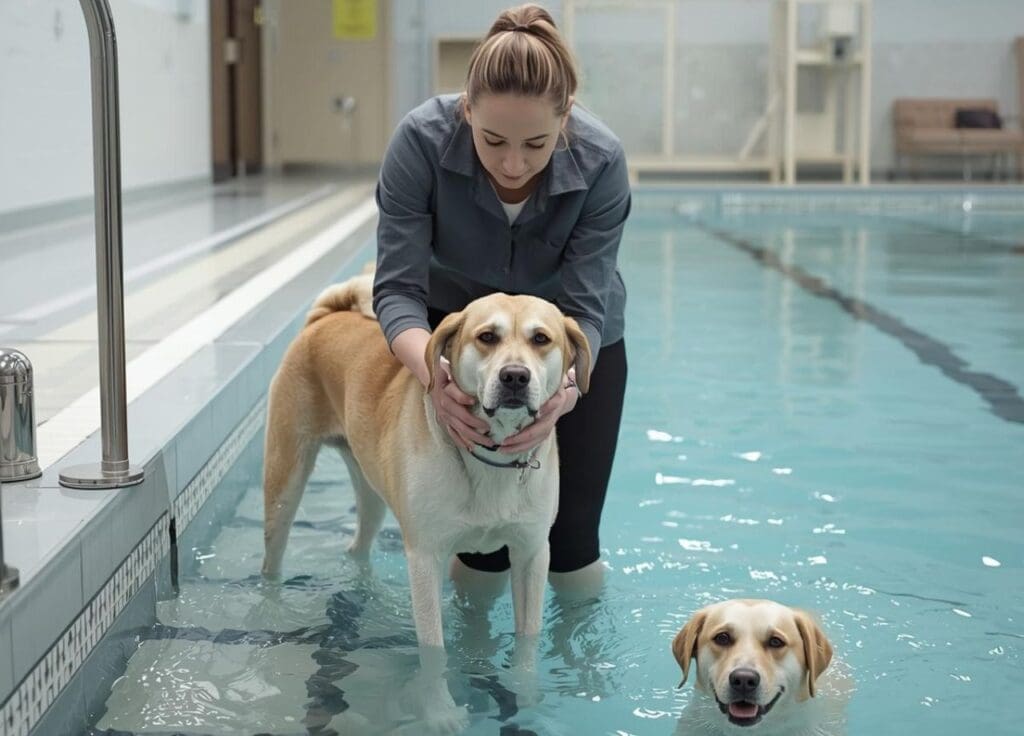
We have learned that positive first experiences shape a dog’s long-term relationship with water. Gentle encouragement, shallow entries, and clear exit points make all the difference. A frightened dog does not need exposure therapy in a lake. They need patience, trust-building, and respect for their limits.
Age and Health Considerations
A puppy and a senior dog are not the same athlete. Just like humans, dogs experience physical changes throughout their lives.
Young puppies may lack coordination and stamina. Their growth plates are still developing, and extended exertion is not appropriate. While some puppies splash happily, structured swim sessions should be brief and carefully supervised.
Senior dogs may face joint stiffness, arthritis, or heart conditions. Interestingly, swimming can be an excellent low-impact exercise for arthritic dogs when approved by a veterinarian. The buoyancy reduces joint stress while allowing muscle engagement. However, fatigue happens faster in older dogs, and getting in and out of water can be physically demanding.
Health conditions such as obesity, respiratory issues, and neurological disorders also affect swimming ability. We always recommend consulting a veterinarian before introducing a dog with medical concerns to water activities.
Water Safety Is Non-Negotiable
In our professional opinion, the question is not just “can all dogs swim?” but “how do we keep dogs safe around water?”
Supervision Is Essential
No dog should be left unattended near a pool, pond, or lake. Even strong swimmers can become disoriented or exhausted. Pools should have clearly accessible exits. We encourage pool-owning families to teach their dogs where the steps are and to practice finding them from different entry points.
On our property, swimming sessions are always supervised by trained staff. We observe breathing, posture, fatigue levels, and interactions with other dogs.
Life Vests Are Smart, Not Silly
There is no shame in using a canine life vest. In fact, we view it as responsible ownership. Life vests provide added buoyancy, help maintain head position, and offer a handle for quick retrieval.
We especially recommend them for first-time swimmers, flat-faced breeds, senior dogs, and boating adventures. A life vest can turn a risky experience into a safe and confidence-building one.
Fresh Water and Rinse Offs Matter
Chlorinated pools, lakes, and ponds all present different risks. Dogs can ingest harmful algae in certain bodies of water. After swimming, rinsing your dog removes chlorine, bacteria, and debris. Thorough drying helps prevent ear infections, particularly in floppy-eared breeds.
These small post-swim routines protect long-term health and comfort.
Not Every Dog Needs to Swim
There is a quiet pressure in modern pet culture to expose dogs to every possible enrichment activity. We believe enrichment should be personalized, not trendy.
Some dogs are perfectly content with structured play, scent work, training sessions, or long nature walks. On our 14 acres, we see dogs thrive in many different ways. Swimming is just one option among many.
If a dog shows consistent fear or discomfort around water, forcing the issue does not build resilience. It erodes trust. Our philosophy centers on individualized care. We observe what each dog enjoys and build experiences around their preferences and abilities.
Teaching a Dog to Swim the Right Way
When owners ask us how to introduce their dog to water, we emphasize patience and positive reinforcement.
Start in shallow, calm water. Allow your dog to explore at their own pace. Support their body gently if needed. Keep sessions short. Celebrate small wins. Never throw or push a dog into water. That single negative experience can undo months of trust-building.
Pair water with something positive, such as praise or a favorite toy. Gradually increase depth only as confidence grows. And always ensure there is an easy exit point.
Dogs learn best when they feel safe. Swimming should feel like play, not survival.
Our Perspective After Two Decades
After 20 years of hands-on experience in pet boarding, daycare, and supervised swimming, we can say this with certainty: not all dogs can swim well, and not all dogs should swim. But many dogs can learn to enjoy water safely with proper guidance and support.
We have witnessed shy dogs blossom into confident paddlers. We have also advocated firmly for keeping certain dogs on dry land. Our commitment is always the same: safety first, personalized care second, and fun third. When those priorities are respected in that order, swimming can be an incredible outlet for energy and joy.
For families in Bealeton and the surrounding Virginia communities who are curious about introducing their dog to water, we encourage thoughtful planning. Consider your dog’s breed, body structure, temperament, age, and health. Invest in safety equipment. Supervise diligently.
Most importantly, listen to your dog. They will tell you, through body language and behavior, whether water feels exciting or overwhelming.
The idea that all dogs are born swimmers is comforting but inaccurate. The truth is more nuanced, and understanding that nuance keeps dogs safe. As caretakers, trainers, and fellow pet lovers, we believe knowledge is one of the most powerful tools you have.
If you ever have questions about your dog’s readiness for swimming or want guidance on safe introductions, our team is always happy to talk through it. Every dog deserves an experience tailored to who they are, not who we assume they should be.